Why Do I Keep Getting Diarrhoea After 50? Common Causes
If you’ve found yourself wondering: “Why can’t I trust my bowels anymore?” Have you started to worry about not making it to the toilet in time? Perhaps your bowels were previously manageable, but now they seem completely unpredictable
Diarrhoea is one of those issues that many people feel embarrassed talking about. The fear of not making it to the bathroom in time. The constant planning of where the nearest toilet is. Avoiding social situations and carrying the mental load of wondering:
Will what I eat cause me to rush to the toilet?
What if I don’t go before I leave the house?
You’re not alone.
Diarrhoea is one of the most common digestive complaints I see in clinic, particularly in people over 50. Yet many people feel embarrassed talking about it and often assume it is simply part of getting older.
The good news is that ongoing diarrhoea is not something you should just put up with and there are often clear reasons why it happens.
By the end of this article you’ll understand some of the most common causes of diarrhoea after 50 and know when it might be time to seek further support.
What Counts as Diarrhoea?
We have all experienced diarrhoea at some point. Whether it is having picked up a bug (I am sure many of you have very vivid memories of a time when you have had an upset tummy!) or have over-indulged. That feeling of your stomach churning and having to rush to the bathroom, knowing that you can’t ‘hold on’ will be familiar
Some people open their bowels three times a week, other people can open them 3 times per day. Diarrhoea occurs when you are passing watery poo, around type 7 on the Bristol Stool Chart below, however some people can describe type 5 & 6 as diarrhoea too. It can also involve frequent bowel movements, going more often than is normal for you, and passing a larger volume of stool.
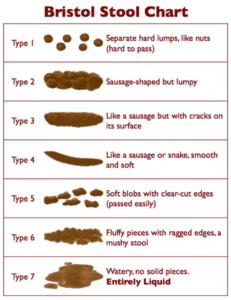
The way I often explain it is that diarrhoea is different from your normal bowel habit. A normal poo should generally be formed and easy to pass. What’s considered normal varies from person to person.
For most people diarrhoea is short lived and self-limiting but if you find that it has become a frequent companion in your life then keep reading.
Is Diarrhoea a Normal Part of Ageing?
Diarrhoea is not considered a normal part of ageing. However, digestive changes that occur as we get older can sometimes make it more likely. A natural slowing of digestion that can result in constipation can also lead to overflow diarrhoea (this is when hard poo gets stuck in the bowel and watery poo gets through the gaps). Medications and other health conditions can also cause changes too. New emerging research has also shown that there are changes to the bacteria in the gut as you age, which can also have an impact. If you’d like to learn more about how digestion changes as we get older, you can read my article on Digestive Problems after 50: why foods suddenly affect you differently
Whilst there are many harmless explanations for diarrhoea, any persistent change in bowel habit should be discussed with your GP, particularly if it is new, worsening, or associated with other symptoms.
Now let’s look at some of the most common causes of diarrhoea.
IBS (Irritable Bowel Syndrome)
Research tells us that IBS is commonly diagnosed between 20 and 40. However, what I often see in clinic is that in those aged over 50 may have lived with an ‘anxious stomach’ for most of their life. When mid-life and older years hit there is often a ‘perfect storm’ which can make what was once a manageable condition become all-consuming. The feeling of bowel urgency and the fear of not making the toilet in time is very real for some people. As mentioned in my previous article: Understanding IBS & why it can feel overwhelming.
IBS is not just down to the food we eat but stress, sleep and activity levels all play a part.
Stress, Anxiety and the Gut-Brain Connection in diarrhoea
The gut and the brain are constantly communicating via the Vagus nerve which runs from the back of the brain down to your gut. The communication happens via chemical messages and electrical impulses. Our growing understanding of this is one of the biggest insights into the gut that has happened in the 26 years I have been a dietitian.
Stress and anxiety can all help speed up the movement of the gut and when that happens there is less time for the large intestine (also known as colon) to reabsorb the water back into your system and the poo is expelled as diarrhoea.
One aspect that is often not spoken about is anticipatory anxiety, for example if you are worried about needing to go to the toilet when you are out then the worry itself can make your symptoms worse.
Can medications cause diarrhoea?
Yes, some medications can cause diarrhoea. However if your feel that a medication is causing diarrhoea then I would never advise anyone to stop a medication prescribed by a doctor. Always discuss any concerns regarding you medication with your doctor or GP.
Other medical conditions that may cause diarrhoea
Coeliac Disease
Coeliac disease is an autoimmune condition where the body reacts to gluten, a protein found in wheat, barley and rye. Symptoms can include diarrhoea, bloating, abdominal pain, unexplained weight loss and fatigue.
It is often one of the first conditions your GP will investigate and can usually be screened for with a blood test. If you think you may have coeliac disease, it is important not to remove gluten from your diet before testing, as this can affect the accuracy of the results.
If you would like to find out more about Coeliac disease then I would recommend visiting the Coeliac UK website
Bile Acid Diarrhoea
Bile acid diarrhoea is more common than many people realise and is thought to affect a significant number of people who have been diagnosed with IBS-D (IBS with diarrhoea).
Typical symptoms include urgent, frequent bowel movements, loose stools and sometimes poo that is difficult to flush away. Some people also notice that their symptoms are worse after eating.
The good news is that bile acid diarrhoea can be diagnosed and treated. If this sounds familiar, it is worth discussing with your GP. You can also find more information on the excellent resource on Guts UK website.
Thyroid Conditions
An overactive thyroid can sometimes cause diarrhoea by speeding up many of the body’s normal processes, including digestion.
Other symptoms may include weight loss, feeling hot, anxiety, palpitations and difficulty sleeping. A simple blood test can usually determine whether your thyroid may be contributing to your symptoms. More information can be found on the NHS website regarding Hyperthyroidism.
Can Food Intolerances and Sensitivities cause Diarrhoea?
The short answer is yes, food intolerances can sometimes contribute to diarrhoea. However, it is important to remember that an intolerance is not the same as a food allergy.
There are many companies willing to sell food intolerance tests that promise to identify your problem foods. Unfortunately, many of these tests have little scientific evidence behind them and can lead to unnecessary dietary restrictions.
The safest way to identify a food sensitivity is through a carefully planned elimination and reintroduction process. Ideally, this should be done with the support of a dietitian to ensure your diet remains balanced and nutritionally adequate.
Common intolerances that may contribute to diarrhoea include lactose, excessive amounts of fruit, and some high FODMAP foods.
It is also important to remember that having an intolerance does not automatically mean you need to cut a food out forever. Most people have a personal tolerance level. I often describe it as a bucket. Once the bucket becomes too full, symptoms begin to appear.
Can constipation cause Diarrhoea?
Yes! A natural slowing of digestion that can result in constipation which in turn can lead to overflow diarrhoea.
Overflow diarrhoea occurs when hard poo gets stuck in the bowel and watery poo gets through the gaps. It is very often very liquid in nature and can be made worse by taking medications like Imodium. In these situations, it might seem counterintuitive but you require a laxative, usually 2 ( a softener and a stimulant) to get the hard poo out of your system. I would always advise you to first contact your pharmacist who may be able to help or may advise you to seek a GP appointment. In these situations dietary measures will not help.
If constipation is something you struggle with, you may also find my article Constipation After 50: Why It Happens (Even When You’re Eating Well) helpful.
Red Flag Symptoms: When to Seek Medical Advice
Whilst there is often an explanation for your diarrhoea if you have any of the following I would recommend that you contact your GP.
- Blood in poo
- Unexplained weight loss
- Having to get up during the night / being woken from your sleep to open your bowels
- Family history of bowel cancer
- Significant changes in bowel habits – either constipation or diarrhoea
What Can You Do Right Now to help your diarrhoea?
There are a few simple things that you can do right now to help your diarrhoea (and things not to do)
- Eat regular meals – the gut thrives on regularity
- Stay hydrated – aim for 6-8 cups of liquid per day
- Avoid making multiple dietary changes at once – pick one thing and try it for no more than 4 weeks. Ideally you should do this under the guidance of a dietitian
- Pay attention to stress and sleep
- Keep a simple symptom diary – noting food, symptoms, stress and sleep can often help identify patterns.
Diarrhoea after 50 can feel frustrating, embarrassing and sometimes worrying, particularly if it affects your confidence to leave the house or enjoy social events. Diarrhoea is a symptom, not a diagnosis. Whilst it can feel frustrating and sometimes frightening, there is usually an underlying reason. The key is understanding what is driving your symptoms rather than simply trying to stop them. Many causes can be managed successfully with the right support.
If you’re tired of planning your life around your bowels, worrying about where the nearest toilet is or avoiding days out because of your symptoms, you don’t have to figure it out alone. In my Gut R.E.S.E.T programme, we spend time identifying what is driving your symptoms rather than simply masking them, helping you feel more confident around food, travel and social situations again.
Book a free discovery call and let’s talk about what’s really going on with your gut.
In my follow-up article, How to stop diarrhoea after 50: A Dietitian’s practical guide, I share practical strategies you can start using today to help reduce urgency and regain confidence in your gut

Fiona Brannigan, BSc (Hons) Human Nutrition & Dietetics, HCPC-Registered Dietitian, Full member of the British Dietetic Association.
Fiona Brannigan is a UK-registered dietitian and founder of Inspirit Nutrition & Dietetic Consultancy, based in Ayrshire and working with clients across the UK. With over 25 years of experience, including more than two decades in the NHS, Fiona has supported thousands of people to improve their health through nutrition.
Her expertise spans gut health, menopause nutrition, digestive disorders, neurological conditions, and rehabilitation following illness. Fiona is particularly passionate about helping adults aged 50+ regain confidence and control over their gut health, manage symptoms such as bloating, constipation, and diarrhoea, and enjoy food without fear or discomfort.
Fiona is regulated by the Health and Care Professions Council (HCPC) and is a member of the British Dietetic Association (BDA). She offers one-to-one consultations online and in person, using evidence-based nutrition and personalised support to help people feel their best at every stage of life.
Book a free discovery call to discuss your gut health goals or learn more about Fiona’s work